Family Traditions•3 min read
The Art of a Slower Table
Create a calmer, more welcoming table with useful pieces, softer lighting, simple serving habits, and rituals your family can repeat.
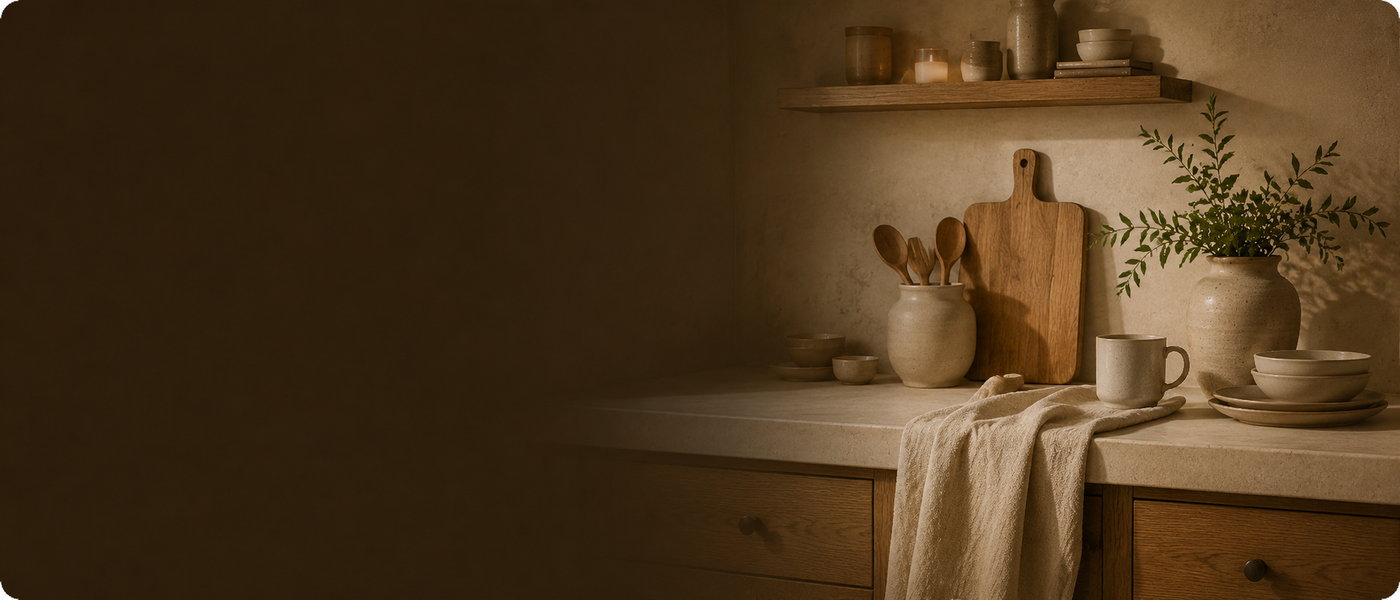
A slower table is not about turning every dinner into an event. It is about creating enough calm for people to notice the meal, the room, and one another. The table can be small, the food can be simple, and the dishes do not have to match. What matters is that the space feels ready to be used.
Most homes do not need more tableware to create that feeling. They need fewer distractions, a few useful pieces within reach, and a rhythm the family can repeat without extra stress.
Clear enough space for the meal
Start by removing anything that does not support eating or conversation. Mail, chargers, unopened packages, and decorative objects can make the table feel unavailable before anyone sits down. You do not need an empty surface, but you do need enough room for plates, serving pieces, and hands to move comfortably.
A simple tray or basket nearby can hold the items that usually collect on the table. The goal is not perfection. The goal is to make sitting down feel easy.
Use serving pieces that work hard
A slower table depends on objects that move easily from kitchen to table. A Dutch oven can hold the main dish and keep it warm. Nesting bowls can handle salad, bread, sides, snacks, or dessert without creating a pile of extra dishes. A utensil holder keeps the tools used during cooking close, then helps the counter feel settled when the meal begins.
Choose pieces for how they support the meal first. Color, texture, and shape matter, but usefulness is what makes an object become part of a family routine.
Lower the light before adding decoration
Lighting changes the pace of a room faster than almost anything else. Turn off a harsh overhead fixture when possible and use a nearby lamp or warm secondary light. A small pool of softer light can make an ordinary meal feel calmer without requiring flowers, place cards, or a styled centerpiece.
Keep candles away from children, fabric, and anything flammable. The slower-table feeling should never come at the expense of safety.
Serve one thing for everyone to share
A shared bowl, pot, bread plate, or pitcher creates a natural reason to reach across the table and pay attention to other people. The food does not have to be elaborate. Soup, pasta, roasted vegetables, tacos, fruit, or a simple dessert can all work.
When at least one part of the meal is shared, the table feels less like separate plates placed in the same room and more like a gathering.
Create one repeatable ritual
Ritual does not have to mean formal tradition. It can be as simple as putting phones away for the first ten minutes, letting one person choose the music, asking everyone to share one good thing from the day, or making tea after dinner.
The best ritual is one your household can repeat even on a busy night. Consistency gives the moment meaning over time.
Let the table look lived in
A useful table will show signs of use. Linen may wrinkle. Stoneware may vary slightly. A serving spoon may stay in the bowl. Those details do not ruin the scene; they are the scene. A home feels personal when objects are allowed to serve people instead of only being displayed.
A simple slower-table checklist
- Clear the surface before the meal begins.
- Use one or two hardworking serving pieces.
- Choose softer lighting when practical.
- Serve at least one shared dish.
- Repeat one small family ritual.
- Leave room for the table to feel used, not staged.
Explore practical pieces for cooking and serving in The Kitchen Collection, or browse more ideas for home and gathering in the Glory & Co. Journal.